
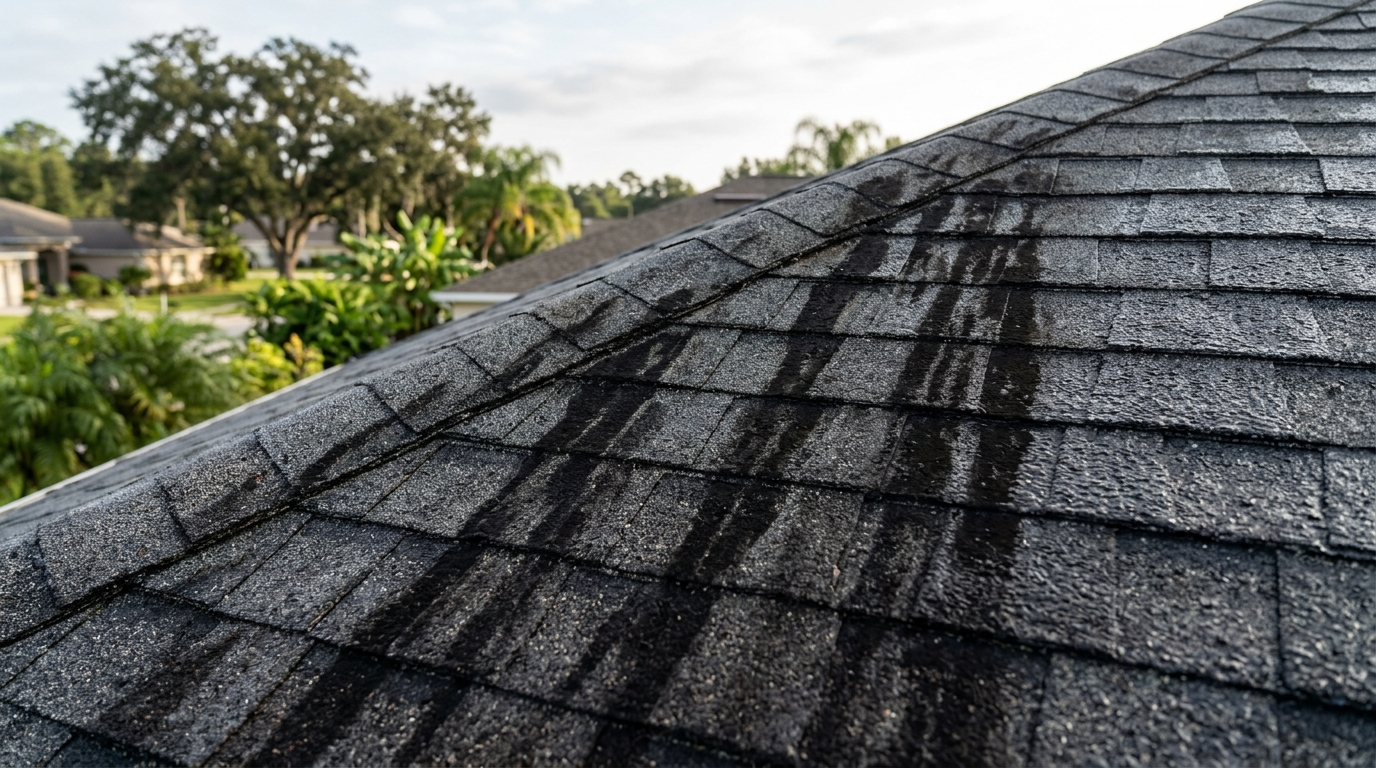
Those dark stains running down your shingles are a living thing, and that is the first thing most Port Orange homeowners get wrong about them. Here at Port Orange Pressure Washing, we hear it constantly: someone rinsed their roof last spring, felt good about it, then watched the streaks creep back within a year. The reason is simple once you understand what you are actually looking at. The black you see is a type of algae called Gloeocapsa magma, and it feeds on the limestone filler baked into asphalt shingles. It is not soot, it is not dirt, and it is not going to blow away in the next storm.
Once you know it is a biological growth, the whole cycle starts to make sense. Kill it wrong and it grows back. Kill it right and it stays gone for years. That difference is what this whole piece is about, and it matters a lot more in a place like Port Orange than it would in a drier climate.
Why Port Orange Roofs Are a Perfect Home for Algae
Our corner of Volusia County gives roof algae almost everything it wants. Humidity here rarely drops for long, and the salt air off the Halifax River and the Atlantic keeps surfaces damp well past sunrise. Morning dew sits on north facing slopes for hours because they get the least direct sun. Add the afternoon storms that roll through most summer days, and you have a roof that stays wet far more often than it stays dry.
Algae spores travel through the air and land on every roof in the neighborhood. You have probably noticed that when one house on your street shows streaks, the houses next to it start showing them too. That is not a coincidence. The spores spread from roof to roof, and once they take hold on a shingle that stays moist, they multiply fast.
There are a few local factors that make some roofs worse than others:
- North and east facing slopes that dry slowly after morning dew
- Roof sections shaded by live oaks, palms, or a neighbor’s tall trees
- Areas under clogged gutters where water lingers
- Older shingles with more exposed limestone filler
- Homes close to standing water, ponds, or heavy vegetation
If your streaks always come back thickest on the same side of the house, look up. Nine times out of ten that slope is shaded, north facing, or both.
The Real Reason the Streaks Come Back
Here is the part that trips people up. When streaks return quickly, it almost always means the last cleaning removed the color but not the organism. You can blast a roof with high pressure and it will look clean the same afternoon. What you did was knock the visible growth off the surface. The roots, and the spores embedded deeper in the shingle mat, are still alive and ready to bloom again the moment conditions turn humid.
Think of it like mowing weeds instead of pulling them. The lawn looks tidy for a week, then the weeds are back taller than before. Algae works the same way on a roof. If the treatment does not actually kill the growth down to the spore level, you bought yourself a few months, not a few years.
The Pressure Washing Mistake
High pressure on shingles is one of the fastest ways to guarantee the streaks come back and to damage the roof while you are at it. The force strips away granules, the little bits of colored grit that protect the asphalt from the sun. Once those granules are gone, the shingle ages faster, and the roughed up surface actually gives new algae an easier place to grab hold. You end up with a roof that looks clean for a season and then streaks worse than before.
The Skipped Step That Matters Most
The step that keeps streaks away is a proper soft wash treatment that uses a cleaning solution to kill the algae, not force to scrape it off. The solution sits on the growth, breaks it down, and the roots die. Rain rinses the dead algae away over the following weeks, and the shingle stays clean because the organism is actually gone. Skip that chemistry, and no amount of rinsing will hold.
How Soft Washing Actually Solves It
The approach that works on Port Orange roofs is low pressure combined with the right cleaning agents. We apply the solution gently, let it do the work, and rinse only as much as the roof needs. There is no pounding, no lost granules, and no roughed up surface for the next batch of spores to cling to. Done correctly, a soft wash reaches into the shingle mat where the algae lives and ends the cycle at the source.
The difference shows up over time. A roof cleaned with pressure alone might streak again in eight to twelve months. A roof treated properly can stay clear for four to six years, sometimes longer on the sunnier slopes. That gap is the whole reason it pays to do it right the first time.
Our safe roof cleaning solutions are built around that low pressure method, matched to the type of shingle and the amount of growth on your specific roof.
We also pay attention to what runs off the roof. Landscaping, gutters, and the driveway below all get protected and rinsed so the treatment cleans the roof without leaving a mess anywhere else on the property.
What Happens if You Just Leave the Streaks Alone
Some folks decide the streaks are only cosmetic and let them ride. That is a gamble that gets more expensive the longer it runs. As the algae spreads, it holds moisture against the shingles, which speeds up aging and can lead to soft spots and rot in the decking underneath. The dark growth also absorbs heat, which raises attic temperatures and pushes your cooling bills up during our long summers.
There is a resale angle too. A streaked roof reads as neglected to buyers and inspectors, even when the roof has plenty of life left. Plenty of homeowners have knocked thousands off an offer because a roof looked older than it was. Cleaning it is far cheaper than the discount a stained roof invites.
Left long enough, the growth can also creep into shaded gutters and along fascia, spreading the problem past the roof itself. Keeping those channels clear with regular gutter cleaning helps water drain instead of pooling, which takes away one of the conditions algae loves most.
Keeping Your Whole Home Clean Slows the Return
Algae and its cousins do not stop at the roof. The same humidity that streaks your shingles puts green and gray film on your siding, your walkways, and your pool cage. When the whole exterior stays clean, spores have fewer places to gather and spread back up to the roof, which is one more reason a clean roof holds longer on a well maintained home.
Pairing roof work with gentle house washing services knocks down the growth on your walls at the same time, so the two problems are not feeding each other season after season.
The same thinking applies to the flatwork around your home. Driveway cleaning and sidewalk cleaning remove the slick organic buildup that thrives in shade, and window cleaning clears the film that dew leaves behind on the glass. It all ties together, and a home that is clean top to bottom simply gives algae fewer footholds.
How Often Port Orange Roofs Need Attention
Most roofs here benefit from a proper cleaning every three to five years, though shaded and north facing homes lean toward the shorter end. The best time to look at yours is when you first spot faint streaking on a slope. Catching it early means a lighter treatment and a longer stretch before it returns. Waiting until the whole roof is dark makes the job harder and the growth more stubborn.
A quick way to judge your own timeline:
- Faint streaks on one slope mean it is time to plan a cleaning soon
- Streaks on multiple slopes mean the growth is established and spreading
- Green fuzz or moss along seams means moisture is sitting too long
- Dark patches near gutters point to drainage that needs clearing
- A roof that streaked within a year of its last cleaning was not treated at the root
You can see the kind of before and after results a proper treatment delivers when you browse our recent projects and reviews from homes right here in the area.
What Sets a Lasting Roof Cleaning Apart
Not every roof cleaning is built to last, and the difference is in the details. When you are deciding who touches your roof, these are the things that separate a clean that holds from one that streaks again by next summer:
- Low pressure soft washing that never blasts granules off the shingles
- A cleaning solution that kills algae at the root, not just the surface
- Care taken to protect landscaping, gutters, and driveways during the work
- Experience with the shingle types and humidity common to Port Orange
- Honest timing advice instead of pushing yearly cleanings you do not need
When you are ready to stop the cycle for good, you can schedule a free quote today and we will look at your roof, tell you what is actually growing up there, and give you a straight answer on how long a proper treatment should last.
A clean roof does more than look good from the street. It buys you years of shingle life, keeps your attic cooler through August, and takes one worry off the list when it comes time to sell. Handle the algae at the root once, and the black streaks stop being an every year problem.
Frequently Asked Questions
What are the black streaks on my roof actually made of?
They are a hardy algae called Gloeocapsa magma that feeds on the limestone filler in asphalt shingles. It is a living growth, not dirt or soot, which is why it keeps coming back if it is only rinsed off the surface.
Why did my roof streak again so soon after it was cleaned?
Usually because the last cleaning removed the visible color but not the organism. If the algae was blasted off with pressure instead of killed with the right solution, the spores and roots stayed alive and bloomed again the moment the weather turned humid.
Is pressure washing safe for my shingles?
High pressure is not safe for shingles. It strips away the protective granules, ages the roof faster, and leaves a rough surface that new algae grabs onto more easily. A low pressure soft wash cleans without that damage.
How long should a proper roof cleaning last in Port Orange?
A roof treated correctly with low pressure and the right solution often stays clear for four to six years. Shaded and north facing slopes may return sooner because they stay damp longer, but they still last far longer than a pressure only rinse.
Do the black streaks damage my roof or just look bad?
They do more than look bad. The algae holds moisture against the shingles, which speeds up aging and can lead to soft decking, while the dark growth absorbs heat and pushes up cooling costs during our long summers.
How do I know when it is time to have my roof cleaned?
Watch for faint streaks on a single slope, which is the best time to act. Streaks on several slopes, green fuzz along the seams, or dark patches near the gutters all mean the growth is established and spreading.
