
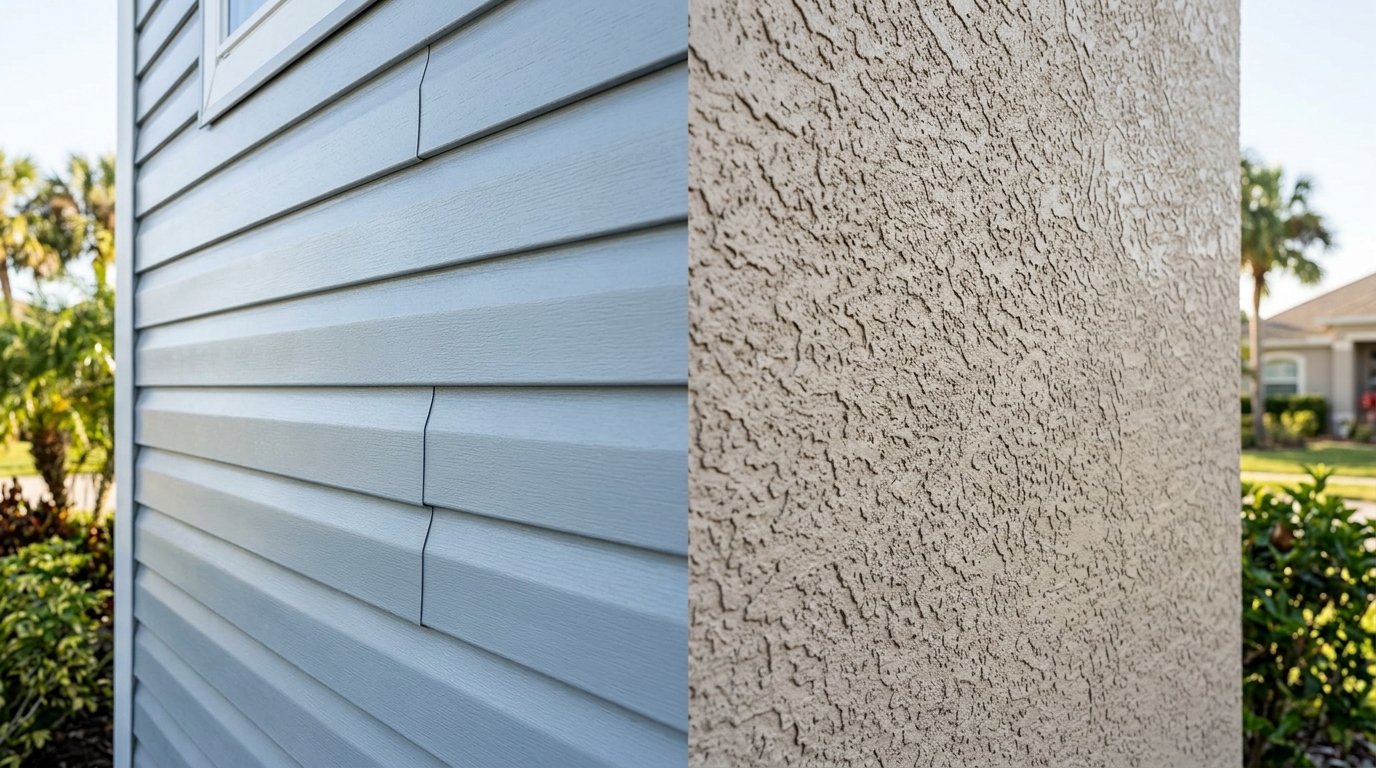
A vinyl siding wall and a stucco wall can sit ten feet apart on the same street in Port Orange and need almost opposite care. One flexes and traps grime in the seams. The other soaks up moisture and holds onto algae like a sponge. We clean both all over Halifax and the surrounding neighborhoods, and the mistakes people make usually come from treating them the same way. At Port Orange Pressure Washing, we adjust the pressure, the mix, and the technique before we even touch the wall, because getting that wrong on stucco can cost you a repair bill.
This part of Florida is hard on exterior walls. Humidity sits high most of the year, afternoon storms roll through all summer, and shade from live oaks keeps the north side of a house damp long after the rest has dried. That combination grows green and black organic stains fast. What works to strip it off vinyl will not always work on stucco, and what is safe on stucco can leave vinyl streaky if you rush it.
How Vinyl Siding Actually Gets Dirty
Vinyl is smooth and mostly nonporous, so dirt sits on the surface rather than sinking in. That sounds easy, and in some ways it is. The trouble spots are the overlaps. Every horizontal course of siding has a lip where one panel tucks over the one below it, and that lip catches pollen, spider webs, dust, and the fine mist of algae spores that float around in humid air.
On the shady sides of a Port Orange home you get a green film that starts light and turns into solid mildew if it sits a season. Near the roofline you often see gray or black streaks running down from the gutters. Those are usually a mix of asphalt shingle runoff and organic growth. Because vinyl does not absorb, a proper soft wash lifts almost all of it without grinding away at the material.
Why High Pressure Is the Wrong Tool for Vinyl
People assume a stronger blast means a cleaner wall. On vinyl, high pressure does the opposite. It can force water up behind the panels where it does not drain well, and on older or brittle siding it can crack the lip or leave a dull, chalky patch where the finish gets scoured. The right approach is a low pressure application of a cleaning solution that kills the algae and mildew, then a gentle rinse. The chemistry does the work, not the force.
The Streak Problem Nobody Warns You About
Vinyl shows streaks when it is cleaned unevenly or rinsed from the wrong direction. If you rinse top to bottom without letting the solution dwell, you drag dirty water across clean panels and it dries in stripes. We work in sections, keep the surface wet, and rinse consistently so the whole wall dries even. On a two story house with lots of window trim, that patience is the difference between a wall that looks new and one that looks blotchy in the afternoon sun.
Why Stucco Is a Whole Different Animal
Stucco is porous, textured, and unforgiving of aggressive cleaning. The surface is full of tiny pits and ridges that hold moisture and give algae a perfect place to root. That texture is also fragile at the surface layer. Hit stucco with a tight, high pressure stream and you will blow out little craters, expose the sandy base, and leave marks that never fully blend back in.
Around here, stucco homes deal with a lot of green and black staining on the north and east faces. The rough surface traps spores, and our humidity keeps them fed. On top of that, many Port Orange stucco walls have hairline cracks from years of heat expansion. Force water into those cracks and you push moisture into the wall system, which is exactly what you do not want in a climate this wet.
The safe method for stucco is soft washing, same principle as vinyl but with even more caution about pressure. A cleaning solution is applied at low pressure, allowed to break down the organic growth, and rinsed gently. The goal is to let the treatment kill the staining at the root so it does not come back in a month. When our gentle house washing services go to work on stucco, the whole point is cleaning the color back without disturbing the texture.
Matching the Cleaning Solution to the Material
Both surfaces respond to soft washing, but the details differ. Vinyl tolerates a straightforward mix and rinses clean quickly because nothing soaks in. Stucco needs the solution to sit a little longer to reach growth that is rooted down in the texture, and it needs a more thorough rinse because the pores can hold residue. Painted stucco adds another wrinkle, since you have to protect the paint film while still killing what is under and around it.
Landscaping matters more than most people expect. Both jobs mean rinsing plants before and after and controlling runoff, but stucco work tends to use more solution over a longer dwell, so we are extra careful with beds and grass right against the foundation. A quick pre soak of your hibiscus and palms keeps everything happy.
What Both Surfaces Have in Common in Port Orange
No matter which wall you have, our climate is the real driver. The stains you fight are organic, and organic growth comes back if you only rinse the surface instead of treating it. That is why a garden hose and a scrub brush feel like a losing battle here. You knock off the visible green, but the roots stay, and within weeks the shady side is fuzzy again.
- Green algae films on the north and shaded walls
- Black streaks running down from gutters and rooflines
- Mildew building in vinyl seams and stucco pores
- Fresh growth returning fast without a proper treatment
- Spider webs and pollen collecting on textured surfaces
Timing helps too. A wash going into spring clears off the winter buildup before pollen season piles on, and a wash after the heaviest summer rains resets the growth before it digs in for another cycle. Most homes here do well with a cleaning once a year, though heavily shaded lots sometimes want it twice.
The Roof and Gutter Connection
Your walls do not get dirty in a vacuum. A big share of those black streaks on both vinyl and stucco starts higher up. Shingle roofs shed organic growth and asphalt granules, gutters overflow when they clog, and all of that runs straight down the exterior. Clean the wall and ignore the source, and the streaks return sooner.
That roof staining has the same organic roots as the growth on your walls, and our safe roof cleaning solutions treat it without the pounding pressure that shortens a roof’s life. On a stucco home especially, dealing with the roof and gutters means the wall stays clean longer, since less grime is washing down the face after every storm.
Tools and Technique We Match to Your Home
The equipment looks similar across both jobs, but how we dial it in changes. For vinyl, we can move a bit faster and rely on a clean rinse. For stucco, we slow down, lower the pressure further, and give the solution more time. We also read the specific house. A 1990s vinyl ranch near Spruce Creek behaves differently than a newer stucco home off Williamson, and the wall’s age, paint, and sun exposure all shift the plan.
Details around the walls need attention too. Window screens, light fixtures, weep holes, and electrical boxes all get handled carefully so nothing gets water where it should not go. If you want to see how these results look on real local homes, you can browse our recent projects and reviews and get a feel for the difference between a rushed rinse and a proper wash.
Common Mistakes Homeowners Make on Both Surfaces
The most frequent one is renting a pressure washer and going too hot on the trigger. On vinyl it leaves streaks and cracks the lips. On stucco it gouges the texture and drives water into the wall. The second mistake is skipping the treatment and just blasting, which cleans for a week and grows back fast. The third is forgetting the windows, driveway, and walkways, so the house looks clean but the surroundings make it look tired.
That last point is worth a beat. A freshly washed wall next to a green driveway or spotted windows never quite lands. We often pair a house wash with window cleaning, driveway cleaning, and sidewalk cleaning so the whole property reads clean at once. For homes with a pool cage, the enclosure screen collects the same algae film your walls do and cleans up nicely alongside everything else.
Getting It Done Right the First Time
Knowing whether you have vinyl or stucco is only step one. Reading the sun exposure, the age of the surface, the paint, the cracks, and where the runoff comes from is what actually protects your home while it gets clean. That is the part we bring to every job, and it is why we do not run the same settings on every wall we touch.
When you are ready to see your siding or stucco look right again, you can schedule a free quote today and we will walk the property, tell you exactly what your surface needs, and give you a straight price. No upsell games, just the plan that keeps your walls clean through another humid Port Orange year.
The best time to book is before the growth digs in. If you can already see a faint green haze on the shaded side, that is the early stage, and treating it now is far easier than waiting for it to turn black by August.
Frequently Asked Questions
Can I use the same pressure washer settings on vinyl and stucco?
No. Vinyl tolerates a low pressure wash with a clean rinse, but stucco is porous and fragile at the surface. Too much pressure on stucco carves out the texture and pushes water into the wall. Both are best cleaned with soft washing, which relies on the cleaning solution instead of force.
Why do the stains keep coming back after I rinse my walls?
A plain rinse only removes the visible film. The algae and mildew are organic and rooted into vinyl seams and stucco pores. Without a treatment that kills them at the root, they regrow within weeks in our humidity. A proper soft wash treats the growth so it stays gone much longer.
How often should Port Orange homes be washed?
Most homes here do well with a wash once a year. Heavily shaded lots or houses under big oaks often need it twice, since those walls stay damp and grow green faster. Washing in spring or after the heavy summer rains keeps the surface ahead of the buildup.
Is soft washing strong enough to remove black streaks?
Yes. The black streaks are usually organic growth mixed with roof runoff, and the cleaning solution breaks them down at the source. That works on both vinyl and stucco without the high pressure that damages either surface.
Will cleaning my stucco damage the paint?
Not when it is done right. Painted stucco is cleaned with a controlled low pressure approach and a proper rinse so the paint film stays intact while the growth around and under it is treated. The risk comes from aggressive pressure, which we avoid on stucco entirely.
